
Apartment Turnover Security Checklist for Managers

A vacant apartment can change hands quickly, but access should never carry over by accident. This apartment turnover security checklist helps Minneapolis and Twin Cities property managers close security gaps between residents, protect maintenance teams, and give the next tenant a secure start from move-in day.
The key is timing. Security work should be scheduled as soon as possession returns to management, not after cleaning, painting, and leasing activity have already brought multiple people through the unit. A consistent turnover process also creates a clear record of what was changed, tested, and issued.
Start With Control of the Unit
Before vendors, cleaners, or prospective renters enter, establish who is authorized to access the apartment. Collect all keys, garage remotes, fobs, mailbox keys, parking credentials, and any amenity-access cards listed in the lease. Do not assume every copy will be returned. Residents may have made authorized copies, shared a key with a family member, or misplaced a remote.
Create a temporary turnover key record for the unit. It should identify the person holding access, the date issued, and the date returned. This is especially helpful when several maintenance technicians and contractors are working in the same building. One labeled, controlled key is far safer than an untracked collection of copies moving from truck to truck.
If a former resident has not returned all credentials, treat the unit as if unaccounted-for copies remain in circulation. That decision should guide what happens next: rekeying mechanical locks, deleting electronic credentials, and replacing remotes or fobs where practical.
Rekey or Replace Locks Before the Next Move-In
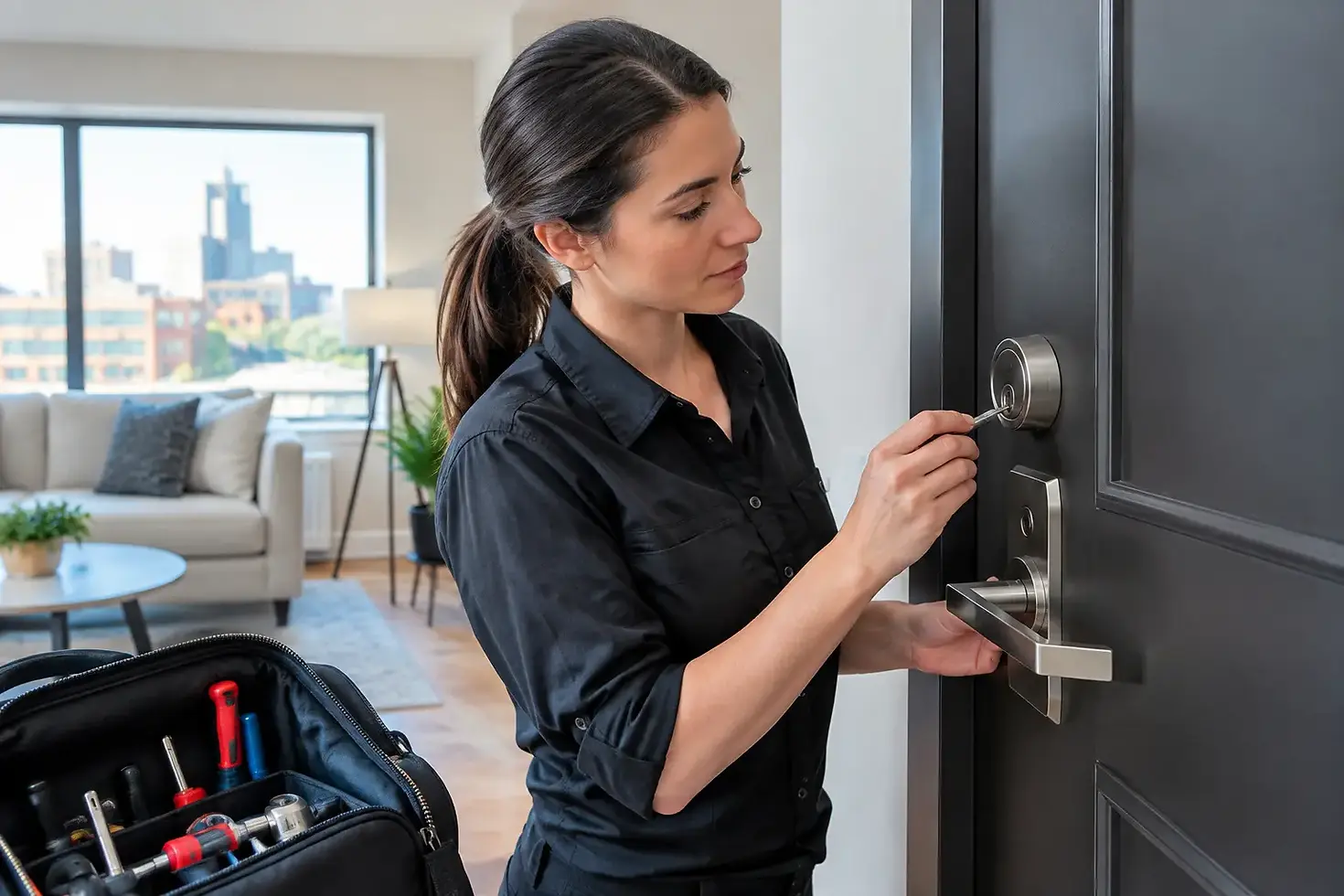
Rekeying is the foundation of most apartment turnovers. It changes the lock's internal key combination so old keys no longer operate it while allowing the existing hardware to remain in place if it is in good condition. For a property with many units, this is usually more efficient than replacing every lock at every vacancy.
Rekeying is not always the right answer. Replace the lock or upgrade the hardware when the lock is worn, loose, damaged, difficult to operate, or no longer provides the level of security the door requires. A deadbolt that sticks, a latch that does not fully extend, or a lever with excessive play deserves attention before a new resident receives keys.
Properties using master-key systems need extra care. A turnover key change must fit the building's keying plan without accidentally affecting maintenance, management, or emergency access. That is work for a professional locksmith who understands master-key systems and can maintain accurate key control records.
High-security cylinders can make sense for specific areas, such as management offices, storage rooms, mechanical spaces, or properties with recurring key-control concerns. They are an investment, so the best choice depends on the door, the risk level, the number of authorized users, and the property's operating needs.
Inspect the Whole Door, Not Just the Keyway
A new key combination cannot compensate for a door that does not close correctly. During turnover, test the deadbolt, latch, strike plate, hinges, door closer, peephole, and weatherstripping. Confirm that the door closes and latches without being lifted, pushed, or pulled into position.
Pay close attention to the strike plate and its mounting screws. Loose hardware can cause repeated alignment problems and makes the lock feel unreliable to residents. Exterior and corridor doors should also have clear address or unit identification so first responders and authorized staff can identify the unit without confusion.
Reset Electronic Access and Shared Credentials
Many multifamily properties use key fobs, keypad codes, proximity credentials, garage remotes, or app-based access. These systems are convenient, but they require the same disciplined turnover process as physical keys.
Delete former residents' credentials promptly from unit, building, garage, package-room, fitness-room, and other applicable access points. Review shared or temporary codes as well. A contractor code that was meant to be short-term can become a long-term exposure when no one is assigned to remove it.
For electronic locks, verify more than whether the door opens. Confirm the lock latches fully, the correct credential is assigned, the audit settings are functioning if available, and battery status is acceptable. Replace weak batteries during turnover rather than waiting for a resident to discover a low-battery alert after move-in.
Avoid using a universal unit code that is easy for staff to remember but hard to control. Unique credentials tied to an individual create better accountability. If your access platform allows expiration dates, use them for vendors and short-term staff access.
Apartment Turnover Security Checklist for Every Unit
Use the same documented inspection for each vacancy. A checklist reduces missed steps when staff are busy and makes it easier to see whether an issue was corrected before keys are released.
Collect and account for unit keys, mailbox keys, fobs, remotes, parking credentials, and amenity cards.
Rekey or replace the apartment entry lock before the new resident takes possession.
Test the deadbolt, latch, strike plate, hinges, closer, peephole, and door alignment.
Inspect patio, balcony, and accessible-window locks, including any pins or secondary locking devices required by property policy.
Remove former residents and temporary users from electronic locks, garage systems, fob databases, and shared access platforms.
Check that storage lockers, utility closets, mechanical rooms, and other controlled areas have the right keying and access permissions.
Confirm smoke and life-safety doors have not been altered with incompatible hardware or improvised door stops.
Record the date of service, lock type, key code or credential record, technician, and any follow-up repairs.
The checklist should be adapted to the building. A single-family rental may have exterior gates, a shed, and attached-garage access to review. A larger apartment community may need attention to common entrances, elevators, laundry rooms, package areas, and secured parking. The principle stays the same: former access is removed, current access is intentional, and hardware works as designed.
Protect Vacant Units During the Turnover Window
Vacant apartments are often accessed by several legitimate people in a short period. Cleaning teams, painters, maintenance staff, inspectors, leasing personnel, and prospective residents may all need entry. The answer is not to make access difficult for everyone. It is to make access traceable.
Keep the unit secured whenever it is not actively occupied. Do not leave a key in a lockbox longer than necessary, and avoid hiding keys in predictable locations. If a lockbox is used as part of your process, limit who has the combination and change it when staffing changes or access has been widely shared.
Walk the unit after major work is complete. Open windows, unlocked patio doors, damaged screens, and doors left on a latch rather than fully locked are common turnover oversights. A final walk-through should happen after the last vendor leaves, not before.
Also consider visible signs of vacancy. Piled-up flyers, an overflowing mailbox, or an unsecured exterior light can signal that a unit is unoccupied. Building staff can address these small details as part of normal property presentation and turnover readiness.
Coordinate Security Work With Leasing and Maintenance
The most effective turnover process is shared across departments. Leasing should know when keys are ready for issuance. Maintenance should know whether a door issue requires a locksmith, carpenter, or hardware replacement. Managers should have a record of completed work before approving move-in.
Set a clear handoff point. For example, the unit is not marked move-in ready until rekeying is complete, electronic credentials are reset, door hardware is tested, and the final key or fob inventory is recorded. This prevents a rushed key handoff when a new resident arrives.
B-Safe Lock & Key can help Minneapolis property managers rekey apartment locks, maintain master-key systems, service electronic locking equipment, and assess door hardware that needs more than a basic key change. Professional service is particularly valuable when the property has restricted keys, high-security cylinders, multiple access points, or a complex master-key plan.
Give New Residents a Secure First Day
At move-in, issue only the credentials the resident needs and document what was provided. Explain how to report a sticking lock, damaged key, malfunctioning fob, or door that does not latch. Residents are more likely to report small hardware problems promptly when they know they are part of the property's safety process.
A clean apartment matters at turnover, but a controlled and properly functioning entry matters just as much. When security is treated as a defined step rather than a last-minute task, every new resident begins with the confidence that their home is truly theirs.


Comments