
When Should Locks Be Rekeyed? Key Times to Act

A key can be copied, passed along, or simply forgotten about without anyone realizing it. That is why the question, when should locks be rekeyed, is less about whether a key still works and more about who may still have one. Rekeying gives homeowners, landlords, and business owners a practical way to restore control of access without automatically replacing every lock.
For many properties in Minneapolis and the Twin Cities, rekeying is one of the first security steps after a change in occupancy, personnel, or key control. The right timing depends on the condition of the hardware and the level of security the property needs.
What Rekeying a Lock Actually Does
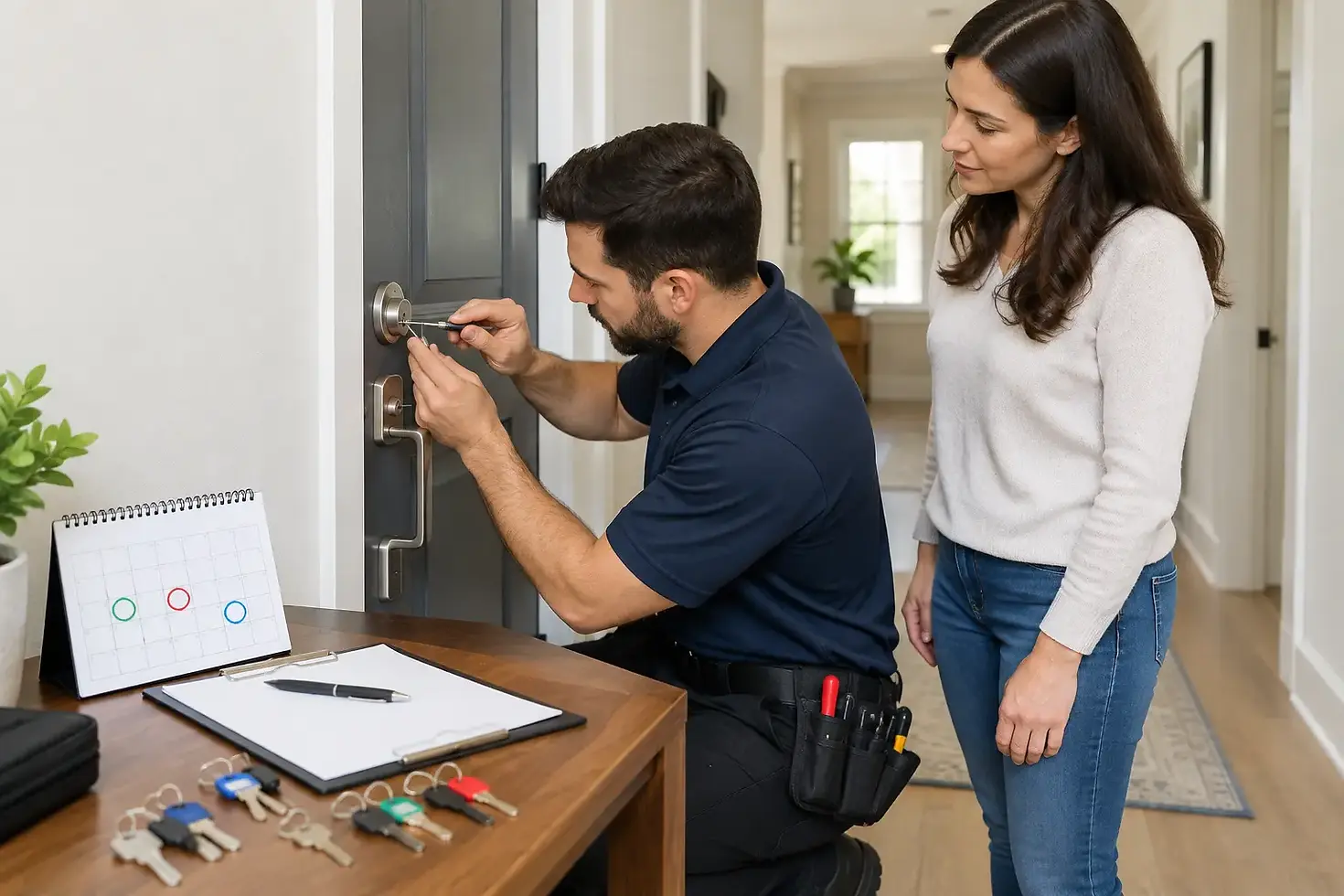
Rekeying changes the internal pin configuration of a lock so the existing keys no longer operate it. The lock hardware stays on the door, but a new key is cut to match the new configuration. A professional locksmith can often rekey compatible door locks, deadbolts, and certain commercial cylinders while checking that the hardware still operates correctly.
This is different from changing locks. Lock replacement means installing new hardware, which may be the better option when a lock is worn, damaged, outdated, incompatible with a desired key system, or no longer provides the level of protection the property requires.
Rekeying is often efficient, but it is not a shortcut around a hardware problem. A lock that sticks, has a loose cylinder, fails to latch properly, or has visible damage should be evaluated before deciding that rekeying alone is enough.
When Should Locks Be Rekeyed at Home?
Right after moving into a home
Rekeying after buying a house or moving into a rental is one of the clearest reasons to act. Even when a seller, former tenant, or property manager turns over every key they know about, there may have been copies given to relatives, neighbors, contractors, cleaners, dog walkers, or previous roommates.
A new set of keys establishes a clean starting point. It also gives homeowners a chance to look at the whole entry system: front and rear doors, garage access doors, side entrances, basement doors, mailbox locks, and any detached garage or shed that uses a keyed lock.
After a key is lost or stolen
A lost key does not always mean someone can identify the door it opens. Still, the risk changes if the key was lost with an address, vehicle registration, work identification, or anything else tying it to the property.
Rekeying is a sensible response when the key cannot be accounted for. It is especially appropriate for exterior doors and areas containing valuables, records, tools, or controlled supplies. Waiting to see whether the key turns up can leave an unnecessary gap in access control.
After a breakup, roommate departure, or household change
Changes in a household are often emotionally complicated, but the security decision can be straightforward. If someone who previously had authorized access no longer lives at the property, rekeying is a practical way to clarify who has entry going forward.
This applies to departed roommates, former partners, adult children moving out, and household employees who no longer need a key. The goal is not to assume bad intent. It is to make access match the current household.
When too many spare keys are in circulation
Many homeowners gradually lose track of keys over time. A spare might be with a neighbor, a family member, a contractor, or in a lockbox whose combination has been shared more than once. If no one can confidently say how many copies exist, rekeying restores a manageable key system.
Afterward, designate who receives a key and where any emergency spare will be kept. That small step prevents the same uncertainty from building up again.
Rekeying for Rentals, Multi-Family Properties, and Businesses
For landlords and property managers, rekeying between tenants is a dependable turnover practice. It protects the incoming resident's privacy and helps maintain clear control over unit access. Common-area doors, storage rooms, maintenance spaces, and shared laundry or utility areas may need separate consideration depending on who needs access.
Commercial properties have similar needs, but the stakes can be broader. Employee turnover, lost master keys, changes in vendors, and department relocations can all affect access. A former employee may have returned their primary key while an extra copy remains unaccounted for. A vendor may still have access to a mechanical room after a contract ends.
In these situations, rekeying selected doors may be enough. In others, a master-key system review is the smarter move. A well-planned system can allow employees to access only the doors they need while managers or facilities personnel retain higher-level access. The trade-off is that key hierarchy and recordkeeping need to be managed carefully, particularly when keys are issued to many people.
Businesses should also look beyond office doors. Rear exits, storage rooms, file rooms, server closets, supply cages, and exterior gate locks can be overlooked during staffing changes. For doors that must allow safe exit, any work should preserve proper operation of panic and exit hardware.
Signs Rekeying May Not Be Enough
Rekeying changes who can use a lock. It does not improve the strength, condition, or installation of the hardware. Replacement or an upgrade may be a better investment when the lock has been forced, corroded, or heavily worn; when the key is difficult to turn; when the deadbolt does not extend smoothly into the strike; or when the door frame and strike plate are loose.
Older basic locks can also be a reason to upgrade, particularly on a main entry door or a business exterior. High-security cylinders, properly installed deadbolts, reinforced strikes, and commercial-grade hardware can address concerns that rekeying cannot. Properties using specialized systems, including Medeco or ASSA hardware, should be serviced with the appropriate expertise and compatible key control.
Compatibility matters as well. Not every lock can be rekeyed, and not every group of locks can be made to work with one key. A locksmith can identify the brand, cylinder type, and condition of each lock before recommending whether to rekey, repair, or replace it.
How Soon Should You Rekey?
For a move, tenant turnover, or staff departure, rekeying should be scheduled before the new occupant or replacement employee begins using the space whenever possible. That avoids handing over access under an old key system and then changing it later.
For a lost or stolen key, timing depends on the circumstances. If the key can be connected to the property or was lost near the location, prompt rekeying is the prudent choice. If the key was one of many controlled business keys, a facilities manager should first identify which doors it opens and whether it affects a master-key hierarchy.
If a lock has already been damaged or is not functioning reliably, avoid forcing it. A professional assessment can prevent a small hardware issue from becoming a door alignment or access problem.
A Better Way to Manage Keys After Rekeying
Rekeying works best when it is followed by simple key control. Homeowners can label keys in a way that does not identify the address if one is lost. Landlords and businesses should keep an accurate record of issued keys, returned keys, and doors included in each key group.
For larger properties, it can help to set a clear rule: keys are not copied without authorization, and access is reviewed whenever a tenant, employee, contractor, or vendor relationship changes. Electronic access equipment may also be worth considering for doors where access needs to change frequently, although mechanical locks remain a reliable foundation for many entrances.
B-Safe Lock & Key can assess existing residential or commercial hardware, rekey compatible locks, and help determine whether a repair, upgrade, or master-key approach better fits the property. The goal is a clear, dependable access plan rather than unnecessary hardware changes.
If you are unsure who may still have a key, treat that uncertainty as useful information. Rekeying at the right moment turns an unknown into a controlled decision and lets the people who belong in the building get on with their day confidently.


Comments